“An intelligent mind acquires knowledge”
Proverbs 18:15
Phonics, vocabulary, comprehension and reading for pleasure
Intent
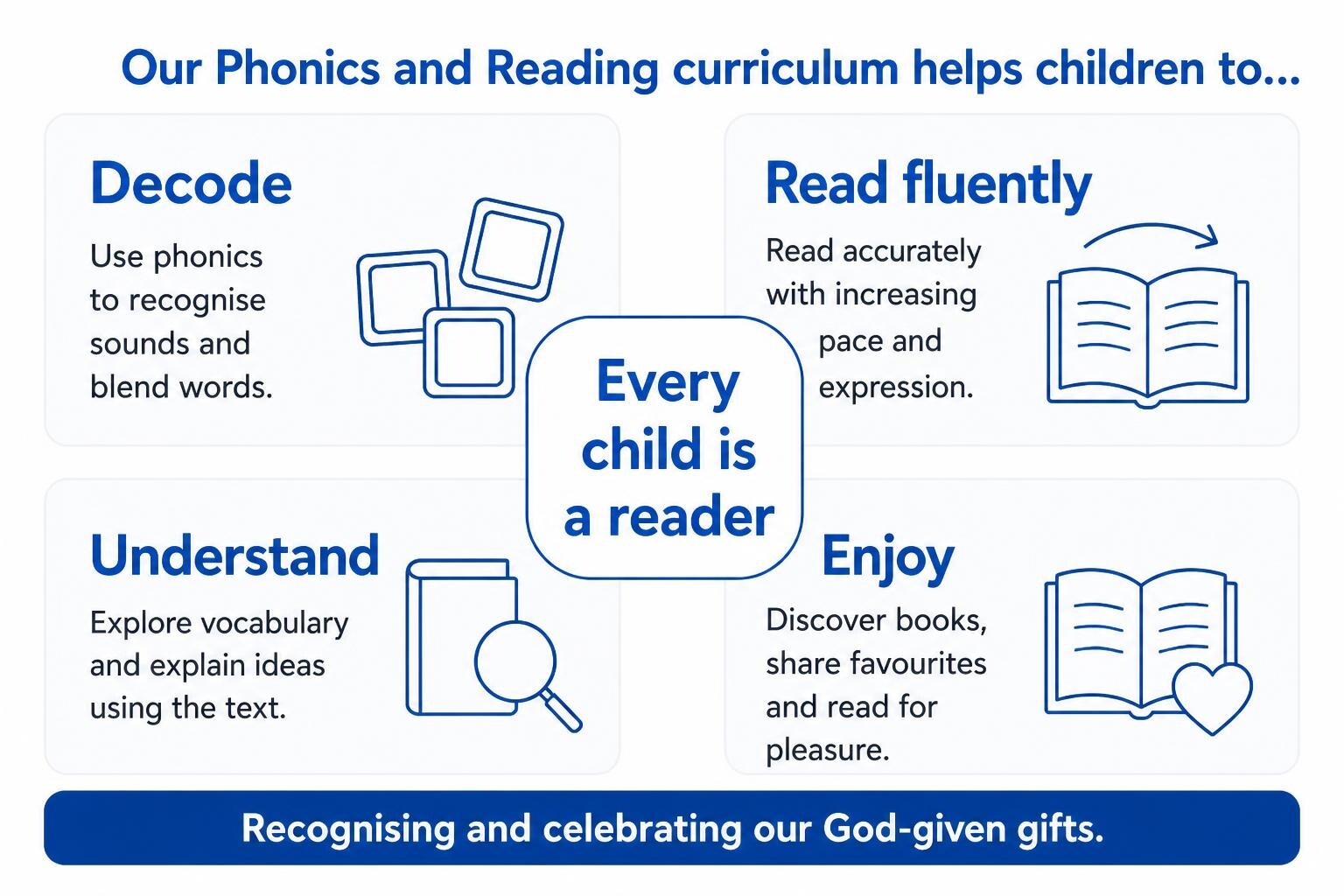
At St Mary’s Catholic Primary School, reading is at the heart of learning. We want every child to become a confident, fluent reader who understands what they read and discovers the pleasure, knowledge and possibilities that books offer. Secure phonics knowledge provides the foundation for independent reading, alongside a rich vocabulary and a growing understanding of language.
Our ambitious curriculum introduces children to high-quality fiction, non-fiction, poetry and scripture. Through our Building the Kingdom approach and Catholic ethos, pupils encounter diverse voices, explore important questions and deepen their understanding of the world and their place within it.
We nurture readers who question, imagine, make connections and discuss their ideas thoughtfully. Our commitment is to ensure that all children receive the teaching and support they need to access reading, participate fully in the wider curriculum and develop a lasting love of books.
Implementation
Early reading begins in Reception through Little Wandle Letters and Sounds Revised. Daily phonics teaching follows a systematic sequence: children learn the links between letters and sounds, blend sounds to read words and segment words for spelling. Regular revisiting and practice secure earlier learning, while assessment identifies children who need additional teaching. Phonics support continues beyond Key Stage 1 for pupils who need it.
Reading practice develops accuracy, fluency and understanding. Children practise applying the phonics they have been taught and revisit texts to build confidence and expression. Teachers model fluent reading and help pupils attend to meaning as their word reading becomes more automatic.
Across the school, guided reading and discussion of our Building the Kingdom texts develop vocabulary and comprehension. Pupils learn to retrieve information, summarise, predict, infer and justify their thinking with evidence. They explore authors’ choices, compare texts and consider different viewpoints. Vocabulary is explicitly taught and revisited, with opportunities to use new words in talk and writing.
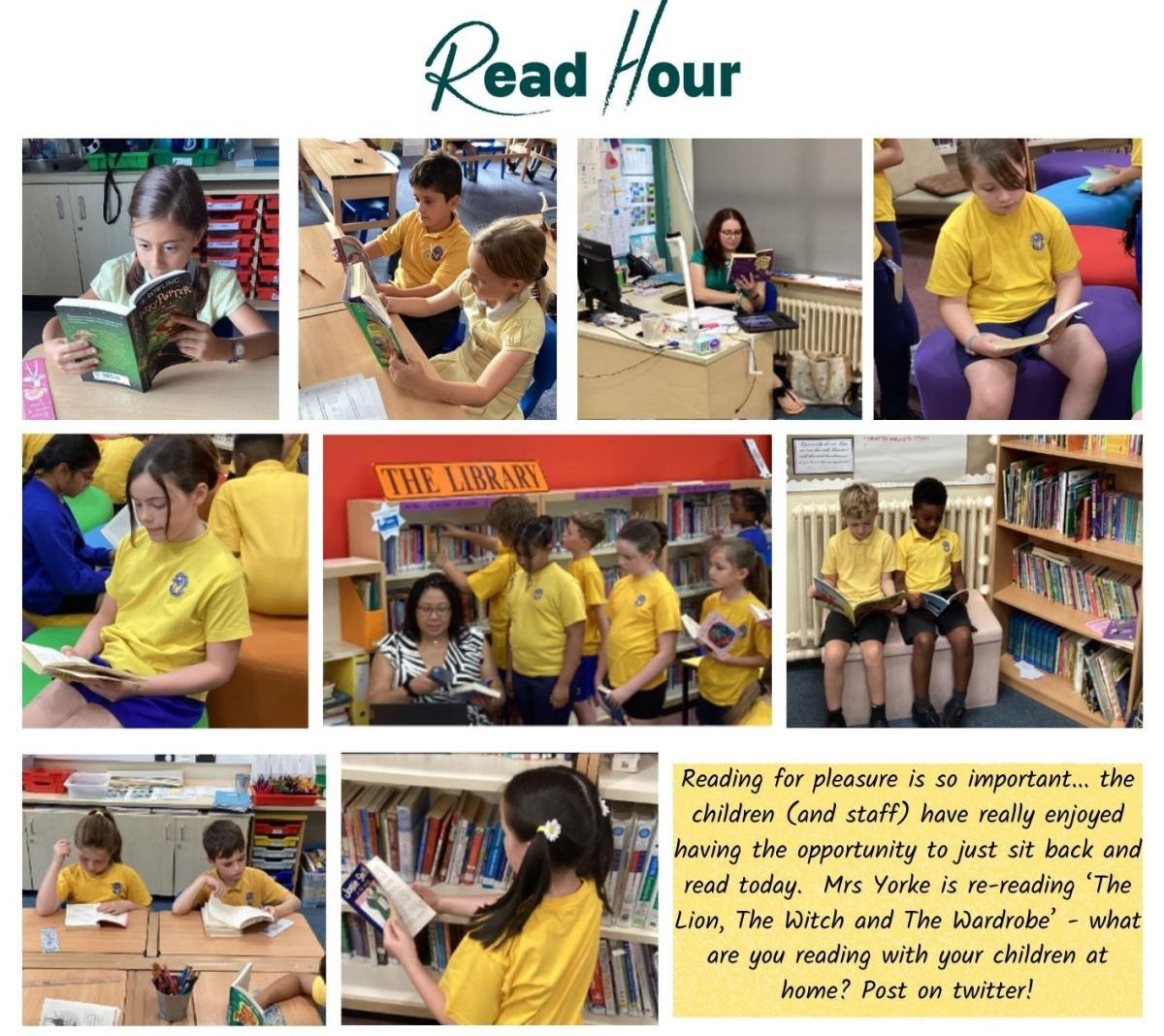
Teachers read aloud daily, sharing ambitious fiction, non-fiction, poetry and scripture. Class and school libraries, independent reading opportunities, World Book Day and other reading events help children discover authors, develop preferences and enjoy reading together. Books connect with learning across the curriculum and open conversations about faith, fairness and the wider world.
Reading is supported through a partnership with families, including home reading and parent workshops. Visuals, pre-teaching of vocabulary, oral rehearsal and targeted support help pupils with SEND and those learning English as an additional language access texts and contribute to discussion. Teachers respond to each child’s needs while maintaining ambitious expectations.
Impact
Children use their phonics knowledge to decode unfamiliar words with increasing accuracy and independence. Through practice, they recognise more words automatically and read familiar texts with greater fluency and expression, freeing their attention to focus on meaning. They apply their knowledge of sounds when spelling and approach new reading with growing confidence.
As pupils progress, they understand increasingly demanding texts, explain vocabulary in context and retrieve relevant information. They make inferences, justify interpretations with evidence and discuss how an author’s language and structure influence the reader. They draw connections between texts and use reading to deepen their knowledge across the curriculum.
Children talk about books and authors, explain their preferences and choose reading that reflects and extends their interests. Shared reading and discussion help them consider experiences and perspectives beyond their own, developing empathy, curiosity and a sense of belonging.
Teachers check progress through phonics assessment, listening to children read, discussion, pupil voice and reading assessments. This evidence identifies the precise support pupils need and informs teaching, so that accuracy, understanding and enjoyment develop together.