
“Let your speech always be gracious”
Colossians 4:6
Conversation, discussion, storytelling and presentation
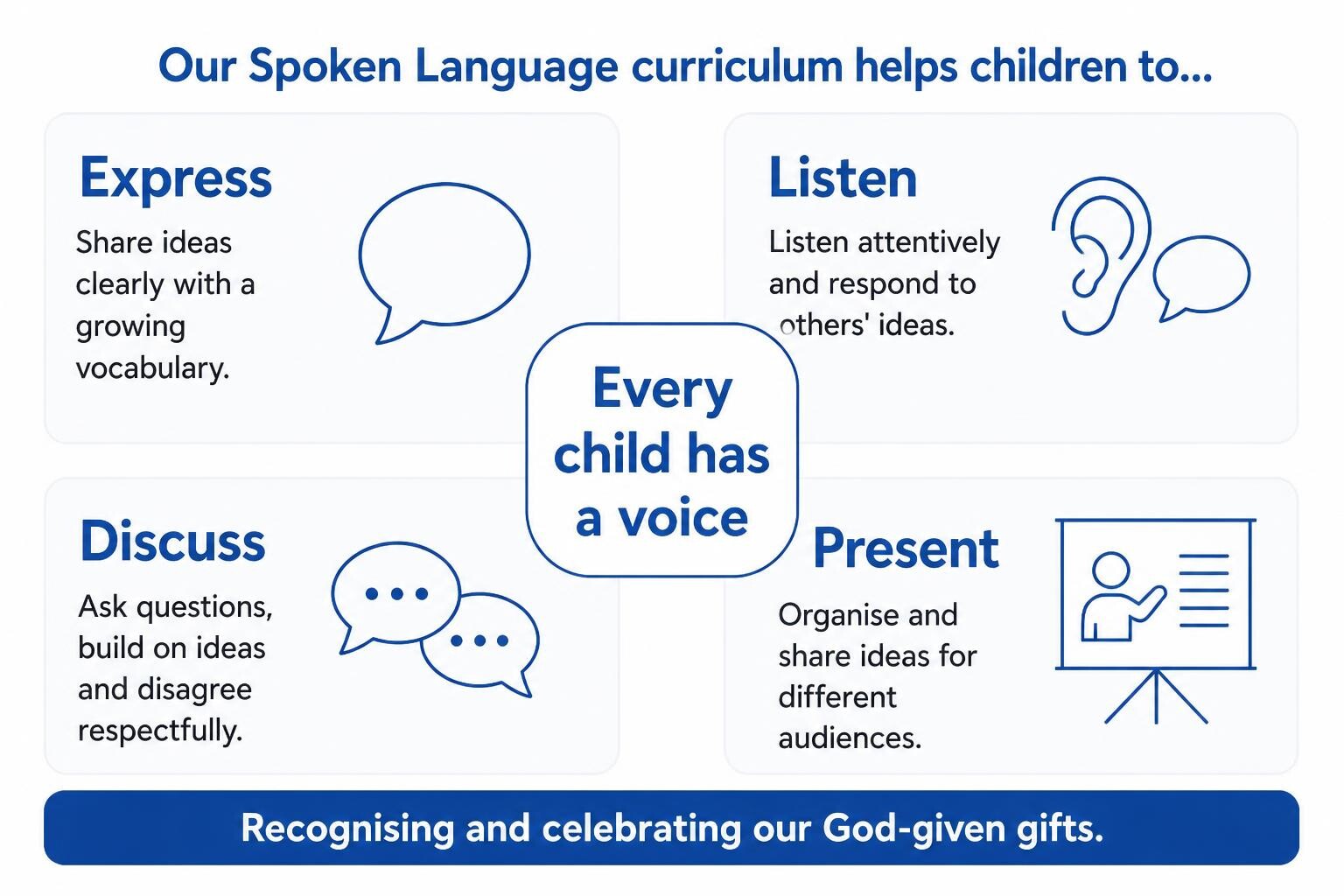
Intent
At St Mary’s, we recognise oracy as central to learning, personal development and participation in school life. We want every child to express ideas clearly, listen thoughtfully and communicate with confidence and purpose. Children learn both to talk effectively and to learn through talk, using discussion to deepen understanding, develop vocabulary and explore different viewpoints.
Our ambition is for all children, including those with additional communication needs, to have their voices heard and valued.
Implementation
Our Oracy Progression Map sets out a cumulative pathway from Reception to Year 6 across four connected strands: physical, linguistic, cognitive, and social and emotional. Children develop how they communicate through voice and gesture; the vocabulary and sentences they choose; how they organise, question and justify ideas; and how they listen, collaborate and respond to others. Earlier learning is revisited as pupils become more independent and adapt their communication for different audiences.
In Reception, stories, songs, play and warm adult interaction build vocabulary, conversation and connected ideas. Across Key Stage 1, children rehearse ordered explanations, ask questions and build on a partner’s contribution. In Key Stage 2, they use increasingly precise subject vocabulary, support viewpoints with evidence, summarise discussions and consider alternative perspectives. Older pupils develop sustained arguments, respond to questions and adapt their delivery to help listeners understand.
Teachers plan purposeful talk alongside subject learning. Adults model the language and communication skills children need, provide thinking time and partner rehearsal, then create opportunities to apply them in discussion, explanation, storytelling, presentation and debate. Sentence stems and shared discussion roles help pupils build on, clarify and respectfully challenge ideas. Specific feedback gives children an opportunity to refine their contributions.
Oracy is woven through the wider curriculum, pupil voice, drama, poetry, assemblies, prayer and liturgy. Pupils explain methods, discuss evidence and explore questions about faith, fairness and responsibility, using talk to deepen their understanding as well as to share it.
Visuals, word banks, modelling and rehearsal support participation. Home languages are valued, and pupils who need alternative ways to communicate can use signing, gesture or augmentative and alternative communication (AAC). Listening is recognised through understanding and a relevant response; eye contact or sitting still is not a requirement. Support is adapted so that every child can contribute meaningfully.
Impact
Children communicate their ideas with increasing clarity, confidence and purpose. They select more precise vocabulary, organise explanations and adapt their voice, pace or supporting gestures to help an audience understand. They draw on what they know across the curriculum to explain their thinking and answer questions.
Pupils use talk to develop and refine understanding. They ask questions that move learning forward, connect ideas, justify opinions with reasons and evidence, and consider views that differ from their own. As they become more independent, they summarise key points, identify where they agree or disagree and reconsider a conclusion when new evidence is offered.
Children listen and respond thoughtfully, build on others’ contributions and make space for different voices. They show respect when challenging an idea and contribute to collaborative learning, pupil voice and the prayer life of the school. Their progress is recognised across everyday interactions as well as prepared presentations.
Teachers use classroom observation, pupil responses and brief self- and peer-reflection to review progress across the four oracy strands. The focus is on how communication strengthens understanding and participation, with individual needs and the support provided taken into account. This informs precise next steps as children become more independent communicators.